
[00:00:00] You've tuned into Radio Northern Beaches. We live stream on rnb.org.au across the northern beaches of New South Wales, Australia, and all over the world. You can also catch us local on 88.7 and 90.3 FM. Our podcasts are available at your convenience at rnb.org.au
[00:00:24] or rnbpodcast.com.au. So you and your friends don't miss any episodes, don't forget to follow and share. Now here's our latest podcast. Welcome again listeners to Community Radio Northern Beaches 88.7 and 90.3 FM streaming live on our website www.rnb.org.au. You can find our
[00:00:48] podcasts on radionorthernbeachespodcast.com.au, programs, community voices, and I'm Michael Lester. I'm particularly pleased to welcome as our guest Thomas Mayo from his home up in the top end of the country at Larrakia country. Thomas is a Torres Strait Island man. He's a very prolific and successful best-selling author both in prose and poetry, but he's also importantly an activist and
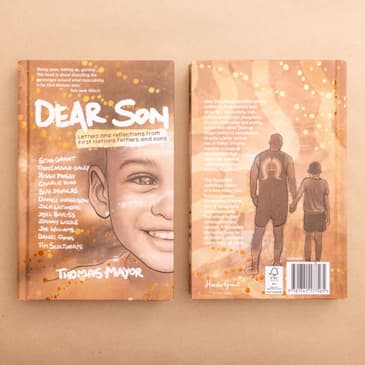
[00:01:14] an advocate on behalf of human rights and particularly of course indigenous rights was a signatory to the Uluru Statement. And in particular, a play based on one of his books called Dear Son has been doing a national tour. Delighted to welcome you here to Radio Northern Beaches, Thomas. Thanks Michael, great to be here with you. Thomas, this book, you edited it, didn't you, called Dear Son, back five or six years ago. It's a collection of some 12 essays that you put together that are
[00:01:44] described as letters and reflections from First Nations fathers and sons. What motivated you to put that together at the time? I had decided after being suggested by Tara June Winch at the first writers' festival I ever went to in Perth back in, I think it was 2020 or 2021, she suggested I should write about fatherhood. And I thought, you know, I wasn't really suitable considering, you know,
[00:02:10] I'd been a flawed father, you know, and it would be deeply, I understood it would be a deeply personal thing to do and quite a vulnerable thing to do. So I said to her, I don't think so. But I thought about it for a while. And when I read James Baldwin's book with two essays in it, it's called The Fire Next
[00:02:34] Sign. And one of them is Epistolary, you know, it's a letter from him to his nephew. It sparked me to think, well, you know, this is the way to write about fatherhood in a letter to my own son. So I set about writing, drafting a letter to my son to feel it out. And as I was drafting that, one of the pieces of advice I gave to my son was to keep an open mind and to consider other people's
[00:03:02] perspectives. And it was at that point that I thought I needed to invite other men to write letters to their sons or fathers, as well to make a fuller book rather than a short with a long essay in the form of a letter. And that's what I did, you know, so yeah, edited those letters from the other guys, we helped each other really, myself and the other guys to draw out all the things that we
[00:03:28] experienced and the truths of our flaws and the self-analysis and analysis of racism and its effects on us and our families and our own fathers and grandfathers. So yeah, that's how it came about, mate. Yeah, Thomas, it must have been a particularly challenging and difficult process for you and the people that you've persuaded to join you in writing these letters. Because I believe,
[00:03:54] well, having looked at it all, that the underlying thing here that you speak about is, I think, unlearning and dispelling the masculine Aboriginal stereotypes and confronting, I think, an underlying question of toxic masculinity. That is indeed what these essays are about. It is very confronting and challenging, isn't it? It's a really important point that I missed, Michael. You know, that was the reason why it was
[00:04:22] important to write about fatherhood or being a man, but from a First Nations perspective, because of the negative stereotypes about Indigenous men and Indigenous fathers in particular. You know, there's been infamous, very racist cartoons published in the mainstream media, for example, that have demonised Indigenous men and basically told our neighbours, our friends,
[00:04:51] our fellow Australians, that Indigenous men abandon their kids and don't care enough about them to even know what their names are, which is absolute crap. You know, we're human like anyone else. And when you consider what those stereotypes do to us and what the disempowerment of Indigenous men and the dispossession of our, not just our country, but our place in our societies and communities,
[00:05:19] denying us pride in our identities, all of those things have an effect. And so I described in the introduction the letters that follow that they are an act of defiance through love. These stereotypes that are promoted can be very dangerous, as you say, because they can affect the attitudes both of the fathers and the sons and their respective relationships with each other,
[00:05:47] doesn't it? One does hear about a certain alienation, and I don't know if it's true or not, between the young generation of Indigenous Aboriginal Australian people and their parents, and particularly their fathers. To what extent is there this any sort of real alienation, distrust and lack of respect between the generations in your community?
[00:06:09] It's no different to any other group of human beings. And you would expect the social issues of any group that has been subjected to what we've been subjected to. You know, no other Australians have experienced what we've experienced. As I mentioned, the dispossession of our own country, the racism, the deeply entrenched systemic racism, the everyday racism. And, you know, racism is a problem
[00:06:37] for other groups as well. And that's not being denied here. But the way that Indigenous Australians has been subjected to it is unique in this country, you know, on our land. And that has an effect. So, you know, it's like sometimes people say, oh, black politics is full on, you know, and you don't want to get involved in any of that. Or, you know, it's particularly laterally violent, or whatever else they say.
[00:07:03] When you consider the conditions that we have come from, and that what we still live in, and all those other factors that are shaping, you know, our day to day lives, then, you know, it's all a human response. And it's why, you know, it's important to help people to understand that the differences that exist, but also the similarities and the fact that we're human beings that just
[00:07:29] deserve the dignity and care that everyone else deserves, you know, when it comes to human rights and being a good country. Our societies here in Australia are experiencing lots of intergeneration issues, particular about toxic masculinity. So none of that, to the extent exists in your own communities, is unique in that respect. Part of the project, though, I believe, of these letters and the difficulties in bravery
[00:07:55] and vulnerability that's exposed, is to build a certain pride in culture and cultural heritage and identity between fathers and sons. What is the traditional, if you like, or even underlying cultural attitude between fathers and sons? I mean, there's much more stylized relationships, isn't there, of rites of passage than we perhaps realize, you know, even in our own communities here.
[00:08:24] Well, yeah, we're not a homogenous group, you know, there's many different First Nations and, you know, the influences of outside factors have, you know, somewhat destroyed those processes of initiation and in some places and the effects are seen in the awful statistics of closing the gap. But it's still very much intact in many places as well, you know, like despite all that's been tried to
[00:08:53] forcibly assimilate us or to erase the wonderful culture and kinship structures and practices of our people, they do still exist. In my own culture, just as an example, in the Torres Strait, it is very much about our uncles play a much more important role than, you know, modern Australian or even traditional European sort of ways of raising men.
[00:09:22] Our uncles are our teachers and our guides as well as our fathers. But it's an obligation that is taken very seriously still today in the Torres Strait as an uncle. The book that we're discussing here with our guest on Community Voices Radio, Northern Beaches, Thomas Mayo, the book Dear Son, a collection of 12 essays about fatherhood between fathers and sons in his book. Thomas, what did you have to confront in telling your own story in this collection?
[00:09:49] I had a pretty harsh father, you know, a tough upbringing and how, you know, how unfair he could be. And I think we probably all think that way about our parents time to time growing up, you know, this was my story and I, to write to my own son, I had to analyze that to understand and to demonstrate to him some deep thinking about how we act and behave and why we might act and behave in those ways.
[00:10:16] I had to think about why was my father like that to me? What had caused him to be cruel sometimes? And that was difficult, you know. And then moving on to talking about my own young adulthood, the young father. I had my first child when I was barely 20 years old and the eldest son that I wrote to, you know, I was 23 when he was born, 24.
[00:10:42] You know, then I had to analyze my own mistakes and flaws and what I had copied from my father in, you know, those some toxic masculinity, actually, that I might have learned from him. And then I acted that way to his mother and towards him. It's difficult to be truthful about that stuff, I think, you know. We, vulnerability, I guess, is a bit of a buzzword these days at times, you know.
[00:11:09] But really it was just about being honest about myself and openly exploring the influences on, you know, that other people had on me and then I was having on others around me. There was a lot of tears, you know, a lot of emotion writing it. I wrote the drafts and shared them with my, his mother, you know, who I split up with. And I talk about that when he was young. I talk about that in the letter.
[00:11:35] So I ran everything by her as I went along to make sure that I was, you know, that from her perspective, I was being as honest and truthful about those things, you know, about why we split up and things like that and how I behaved and also ran the drafts by my son. So it was a good healing process as well. And the other men that wrote their letters, when I invited them, as I said, it wasn't the initial idea to have an anthology of letters.
[00:12:04] I really had to, not with all of them, some of them were, you know, expert writers like Stan Grant, an accomplished journalist and author. But others of them that, you know, have no, very little profile and a lot of people would never have heard of, you know, had never written before. And I worked with them to just work through drawing out the same things that I had to put on paper, you know, about, about themselves, which wasn't easy for them.
[00:12:33] But they were very generous. Indeed, there must have been, because the very process that every one of you contributing to this book must have been involved in as a process must have been very challenging and take a lot of bravery, as we say. I mean, there is a very diverse collection of experiences, lived experiences documented here in these 12 stories, including yours. To what extent might it be described or might be describing a move from grievance towards solace and hope?
[00:13:02] And there's a range of paths through that, isn't it, documented? And it seems at the end of the day, solace is found in many directions. I think you mentioned Stan Grant. Does he find his solace in religion? Or Troy Cassadaly, did he find his solace and his path through all this in music? Are there different pathways through these lived experiences?
[00:13:25] Oh, Stan and Troy had quite different paths through their letters to describing their, you know, relationships and, you know, their thoughts about fatherhood and their past and their futures, you know. I'm really glad you asked this, you know. There's basically 14 letters in the book, two from me, one to my son, a long letter to my son in the book.
[00:13:54] It's the first letter in the book and then a short letter to my father at the end. And when you write such anthologies, you know, because my first, my very first book I ever wrote, Finding the Heart of the Nation, was an anthology of interviews from a first person perspective, you know, a narrative style. But you worry that you're going to get these stories that are too much the same and bore the reader. But, you know, without much guidance or shepherding, everybody had a different story to tell.
[00:14:24] The commonality was racism and struggles, but how they dealt with that and how they overcame those things and the effect of those things on their lives personally were all quite different. And also, I'm glad you asked that because it's not a book of grievance or, you know, Paul, follow me. Although we should have a, you know, people should acknowledge and respect that we have a story to tell that might make people uncomfortable to hear.
[00:14:51] But it is, it's very much a joyous book about Indigenous fatherhood. It really ultimately celebrates that First Nations pride in many, many generations on this country of Indigenous men and the strength of all of that and how much stronger we could be when we celebrate, you know, who we are, what we've achieved and how we've survived and will overcome.
[00:15:19] Thomas, in terms of pathways, I believe you were born and raised in Larrakia country. So you were born and raised in the culture and the tradition. But you found your own pathway through this, not least, among other things. I mean, I believe you've been, you finished school there at year 12. You moved into union activism, I think. I believe you could even currently hold office in a union. But importantly, perhaps from my point of view, you seem to have moved into what you did,
[00:15:47] into writing, prose, poetry and being an activist. How did you follow this path? What gave you the strength to follow this path, particularly towards writing and activism? Well, it was, I think, a sense of justice, you know, a desire to see fairness in the world and, you know, how it didn't sit with me well to just ignore when people were treated poorly. I might have partly, I've thought about it a lot.
[00:16:17] But it might partly come from the way that I was treated by my own father and, you know, the unfairness that I felt. And perhaps that was one of the reasons. Maybe it was because I listened to a lot of Bob Marley as a teenager. But also, I think it was, and I do write about this, the influence of the union on the wharves when I started on the wharf when I was 17 years old and learning about solidarity,
[00:16:42] learning about social justice, learning the history of how we have achieved the things that we have, not just as Aboriginal and Torres Strait Islander people, like land rights and native title and the right to vote and equal pay, you know, all wonderful stories to learn, especially when, you know, you learn that the union movement has had so much to do with Indigenous rights and the achievements we've made. But to broader Australia, you know, universal health care for all, you know,
[00:17:12] like compared to the United States, the leave systems that we have, you know, the employment standards that we all take for granted, you know, personal leave, annual leave, long service leave. And more recently, unions have won things like domestic violence leave and maternity leave. So pride in being a part of that movement once I joined the union and learned about what those union elders had sacrificed to achieve those things.
[00:17:38] I could not, I don't think I could not end up stepping on that path as a person that couldn't ignore injustice and learning how to make positive change. That's how I got on that road. I believe you were the one of the principal campaign directors for the Yes 23 in support of the Uluru Statement and particularly the referendum October 23 for The Voice. Yes. I wasn't the director of it. Yeah.
[00:18:06] Just to correct that, I was on the board for the Yes campaign. The director was a fellow named Dean Parkin and he did a good job. You know, we all tried our best. Yeah. Incidentally, you wrote around that, didn't you, using your writing skills and voice because you put together a voice to parliament handbook, I believe. And then subsequently, much more recently and post the referendum, always was, always will be the campaign for justice and recognition continues. And what's next?
[00:18:35] What lessons did you draw, do you think, from your participation, very active participation as a leader in that failed referendum campaign? Yeah. Well, firstly, about the first book you mentioned, the Voice to Parliament handbook. I wrote that with Kerry O'Brien. He's just such a great man, Kerry. And, you know, he's retired now. He was the right person to do that with, I think, to just help Australians try to understand it. And we were both very proud of that work that we did.
[00:19:03] It was a bestselling book that year. People bought, you know, multiple copies and gave them to friends and others that were struggling to understand. And it made an impact, but sadly not enough. And that's why I wrote, you know, after the referendum, though I was heartbroken and pretty shattered and tired because I'd worked for five years to travelling almost nonstop with the Uluru Statement and building a movement. And then that very, you know, long campaign once Albo announced that we were going to referendum.
[00:19:33] Intense. You know, in 2023, I did 326 in-person events. And I did, I think it's 51 online events, not counting interviews with the media. That was in about 10 months. So I did that much. And so I was pretty, pretty exhausted. Pretty full on. But, you know, I knew that other people were feeling the same. You know, it wasn't just me.
[00:20:02] And there were six and a half million people that voted yes. And there were, you know, I can't remember how many, but thousands and thousands of Australians did their best to break through the disinformation and confusion tactics that were very effective by the No campaign. And they were all as shattered as I was, you know, people that had door knocked for the first
[00:20:25] times in their lives that had had the uncomfortable debates with their family or friends and undoubtedly lost some friends through the whole thing. They were as shattered as I was. So I pretty much immediately set about writing Always Was, Always Will Be, the campaign for justice and recognition continues to try and lift them back up and to dust them off and get them out there to keep going.
[00:20:50] Because one of the things I said in the book, Michael, is that if you look at what our elders experienced when they did go for the right to vote, because we didn't have it until not that long ago, really, when they fought for equal wages, which is, you know, not that long ago as well, just talking about the 70s when it came into effect, equal wages and all the other things we've achieved. We were always told no repeatedly before we eventually achieved yes.
[00:21:20] Yeah, it's a long road and a long, hard struggle and can never be taken for granted. So the question about what's next is a very important question that you addressed. Truth telling was an important leg of the Uluru Statement. And that in itself doesn't seem to have made much movement since the voice referendum, I don't think. Although might we say that your play, based on your book, is a continuation of an exercise in truth telling in many respects?
[00:21:48] What do you feel about the fact that your book's been made into a play? Presumably this was not something that you aim to achieve. Oh, Michael, it's hard to describe, you know, like it was such a special moment sitting in that theatre in Brisbane in the first season for the opening night. And I brought my family over from Darwin and my son that I wrote the letter to was living in Broome at the time. So he flew over to Brisbane for it.
[00:22:18] And to be, you know, sitting next to the son that I wrote that letter to, after all we'd been through, when those actors, brilliant actors, you know, Aaron Pedersen, Jimmy Barney and others, just to hear what you've written and such deeply personal words acted out by great actors. And you're watching it with, you know, a packed audience with the person that you wrote it
[00:22:46] to is something that I'll never forget. You know, the goosebumps, the tears, the pride. Yeah, really special, Michael. Well, yeah, maybe at the heart of that story and message, to use a cliched word, is about having the bravery to confront truths and to man up, in a sense, in this particular case
[00:23:11] and with the play about confronting the ability for fathers and sons to speak to each other beyond toxic masculinity, you know, with messages of love and admiration and setting these other things aside. Presumably two audiences are confronted with this sort of challenge too, aren't they? Yeah, it is, you know, but at the same time, I like to think that we, I think we all have
[00:23:40] the capacity to, I mean, we all care about something, right? And we all love our families, I think, you know, and want to be loved. And so it's such a fundamental human thing, I think, that the ability for the want to love fully and to be loved fully. And so I think, you know, the play and the book to Indigenous and non-Indigenous audiences,
[00:24:08] and I've seen it, it resonates across those groups, you know, because at the end of the day, ultimately, it's about, you know, our capacity to be human. Yeah, I'm in conversation here, Community Voices Radio Northern Beaches with Thomas Mayo on the line from his Larrakia country up in the top end around Darwin, author, activist. We've been talking particularly about his writings and his collection, Dear Son, Letters
[00:24:37] and Reflections from First Nation Fathers and Sons, which is these days have been converted into a play and has been touring nationally. As we wrap up here, Thomas, I'm wondering in terms of the bigger picture and your always was, always will be, what next steps? The Uluru Statement had the three legs. And of course, there was the voice which met its fate with the failed referendum. But there's still the other two legs.
[00:25:05] Aside from that, the truth-telling and the treaty. Where do you stand at the moment in the way forward? Is truth-telling, part of which we've been discussing, still got an important role to play and how? Well, here's an important thing to consider for everyone that wanted to see success in 2023 for, you know, voice and treaty and truth-telling. We are achieving those things.
[00:25:31] So the people that were behind the No campaign would like us to believe that we were defeated and it met its fate. But its fate is always going to be success, like those things that I mentioned earlier that we're always told no about. When they said no, it didn't mean it was over. We just continued to build more allies, continued to educate others, brought people along with us, and eventually we achieved those things. So, you know, when it comes to voice, we saw a legislated voice established in South Australia.
[00:25:59] Since then, we've seen the Victorian Treaty come into legislation, which establishes a voice. It establishes processes for greater accountability and transparency when decisions are being made that affect Indigenous people. And we've seen in that treaty as well an ongoing truth-telling process. We've seen a Liberal government, actually, a Conservative government in Tasmania, since then commence a truth-telling process, a truth-telling commission.
[00:26:29] So while, you know, other Conservative governments have ended those processes, we continue to make ground. And so I want the listeners that want these things to understand that, and I want the listeners that don't support these things to understand that this is something that will never go away. And it's wasteful for governments to throw out those processes that have begun, like truth-telling and treaty-making, because we're always going to come back to it. So we just need to reckon with it and move forward.
[00:26:58] And the truth is, no one's going to lose anything from it. Just like if there was an advisory voice in the Constitution, which is what the outcome would have been in 2023 if it was successful. All it would have done was strengthen our democracy and see a bit more fairness for people that have topped it for far too long. And, you know, we're going to achieve those things. So you should just walk with us and let's get this done as Australians. Well, yeah, let's get this done.
[00:27:28] As you say in your book, Subtitle Campaign for Justice and Recognition continues. It's a very long story of continual struggle and endeavour and bravery and challenge, something that will never go away. What a wonderful statement that is too. So thank you very much, Thomas Mayo, for joining us on Community Voices Radio Northern Beaches. Thanks, Michael. It's been good fun talking with you, mate. Great interview. Australia, the lucky country. We've got meat pies.
[00:27:57] We've got the world's best beer. And most importantly, top of the list, we've got Radio Northern Beaches 88.7, 90.3. Now hitting the entire world on www.rnb.org.au.