
[00:00:00] You've tuned into Radio Northern Beaches. We live stream on rnb.org.au across the northern beaches of New South Wales, Australia, and all over the world. You can also catch us local on 88.7 and 90.3 FM. Our podcasts are available at your convenience at rnb.org.au
[00:00:24] or rnbpodcast.com.au. So you and your friends don't miss any episodes, don't forget to follow and share. Now here's our latest podcast. Welcome again listeners to Community Radio Northern Beaches 88.7 and 90.3 FM. We're streaming live on our website www.rnb.org.au and you can catch
[00:00:48] www.radionorthernbeachespodcast.com.au. I'm Michael Lester and our program's Community Voices. I'm delighted to welcome back again to our program on an important issue of local heritage and development, Jill Lestrange on behalf of the Headland Preservation Group to talk about plans that seem to be afoot for the sale of parts of HMAS Penguin in the defence facility here on Middle Head above Balmoral. So thanks
[00:01:17] very much Jill for joining us once again on Radio Northern Beaches. Thank you very much Michael for inviting me to address your listeners today. Jill, what do we know about the plans for the proposed sale? I see sometimes it's referred to as a planned partial divestment and on other occasions it's
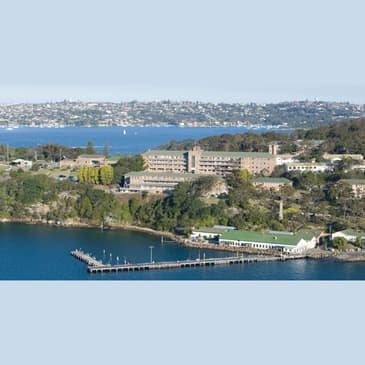
[00:01:39] described as a proposed sale. Michael, from my understanding it's a partial divestment of the HMAS Penguin site. We do have a rudimentary map showing the boundaries of that. You need to sort of understand the Penguin site. It's about 16 hectares.
[00:02:03] It's a large specifically built naval base so there's a large built environment but it also includes at least four hectares of pristine ancient Angopera forest and the partial divestment seems to include probably well over half of the built site as well as the entire Angopera forest. The finance minister
[00:02:32] has said that the exact boundaries won't be determined until the actual time of divestment. In terms of the significance of this site you've started to describe it, 16 hectares there of prime land. It's on Middle Head as we all know. Importantly it's totally enclosed by isn't it? The National Park on Middle Head I believe which is run by the what is it? The Harbour National Park Trust
[00:02:59] and it's prime waterfront land too isn't it? It is prime waterfront land. The land actually is part of the original military estate that was put aside in 1870 and that was when the British left Australia to its
[00:03:19] own defence when they left our shores and that land includes Middle Head right up to the 1801 fort and the 1870 fortifications all the way to Penguin. So that land was put aside. They decided that Middle Head was so strategically important because of its position in the Harbour and that it faces out the heads that that land
[00:03:49] needed to be put aside for the defence of the colony and for Sydney and the nation. So the Penguin actually abuts land that's now managed by the Sydney Harbour Federation Trust. We do the middle head, the land around the water is managed by the Sydney Harbour National Park. The Sydney Harbour Federation Trust manages
[00:04:14] the lands more on the plateau and HMA's Penguin abuts that. I believe that part of this divestment doesn't include some of the facilities and are they the waterfront facilities, the so-called diving and underwater marine facilities? In other words is this prime waterfront activity going to be retained anyway? Time waterfront activity will be retained because it's critical. It's the clearance diving diver training
[00:04:43] school and the underwater medicine unit as located there. That is a critical infrastructure for Navy. The areas to be divested are used, a lot of it is accommodation, training facilities, other training facilities. The critical aspect is to be retained. And this is a very significant historical military site. As you say, the whole of middle head. There has been on many occasions before a much controversy
[00:05:11] about proposed sale of the land, but it eventually ended up, as we know, most of middle head is held in public trust, isn't it? By the Sydney Federation Trust. So that's all been talked about before in the context of defence selling and getting money. But somehow those battles were won in favour of the heritage and the environment, weren't they? They were. What's really interesting is that there was actually
[00:05:36] a prior attempt to the establishment of the Sydney Harbour Federation Trust, a prior attempt to sell off the Angoffera Forest that we're talking about back in 1988. In 1988, the Hawke government proposed the sale of the Angoffera Forest. And that was for 30 luxury houses. And the community was absolutely infuriated because
[00:06:01] they could see that this land would be lost to the people of Australia. And it was Tom Uren and the mayor of the time, Barry O'Keefe, who spoke about against this ludicrous plan. Thousands protested and the forest remains untouched today. But then again, in 1996, when the Howard government proposed
[00:06:27] the sale of Middlehead, Georgia's Heights military facilities for 180 housing sites, it was the political pressure of Jack Mundy bobcar together with the community that resulted in the government in 2001 giving the land to the people of Australia. And that's when the Sydney Harbour Federation Trust was established to hold the land in perpetuity for all Australians. But what is
[00:06:57] incredible is that we've now got a further sell off happening. And then this time it's the Albanese government. And it's really ironic, isn't it, that the Labour Party greats have been instrumental in saving the Angofer Forest and the Georgia's Heights military sites. And now Labour is proposing another sell off. What does the government not understand? That these lands are so important, the environmental,
[00:07:27] the national heritage of these lands should transcend all politics. It should be across all party lines. It should be protected. And in fact, Paul Keating, another Labour stalwart, has come out recently and condemned it. He says, and I'm going to quote him here, former military assets of this quality and historic
[00:07:51] importance should be removed by the government from any sale program, defence sponsored or otherwise. Paul Keating says, doesn't he, that the defence in his view has no right to sell off this significant public land, which he believes belongs to what he calls the national estate and is held by defence in virtual trust on behalf of the nation. That's his fundamental argument, isn't it? It is his fundamental argument. And funnily enough, Richard Miles has said almost the same thing.
[00:08:20] He said the heritage value of the properties does not belong to the Australian Defence Force. It belongs to the people of Australia. However, they're looking to sell it off to private developers. Apparently, there have been already moves on this land, haven't they, prior to this? I believe not least by New South Wales Land Commission, who put up unsolicited bids only a year or two ago for not just this land,
[00:08:47] but for a couple of other defence sites. This was even before they were called for. I think they wanted to take over quite a portfolio. And it's reported that even private equity interests have offered huge money for the whole portfolio. We're talking here, I don't know, some 50 sites that defence has identified of which Penguin is one, but private equities already put their hand up offering billions.
[00:09:13] Yes, we understand that the property developers are circling. And so that is very, very concerning. Now, we understand that there are some sites that are not critical now to defence, that some of them need a lot of money spent on them and their surplus to their requirements and possibly could be sold. But the money, of course, the value is in sites like HMAS Penguin and Victoria Barracks,
[00:09:42] because they're located in such prestigious locations. It seems like it's a push for money by defence, which in many ways is ironic, because we've got one of the largest defence budgets we've ever had with every plan to increase it to a much bigger proportion of GDP. We're spending nearly a billion dollars a year already. And of course, we've signed up for
[00:10:04] 380 billion dollars of AUKUS submarines, which are the biggest single project expenditure full stop ever undertaken in Australia. And here come defence trying to raise one or two or three billion dollars, which would seem like chicken feed, supposedly by selling off the national estate for there to try to underpin and underwrite this huge budget commitment to AUKUS.
[00:10:31] I agree with you, Michael. I mean, they estimate really the net amount that they would make from the sale of all these 67 sites is 1.8 billion. Well, this is a drop in the ocean. It's irrelevant to defence's budget pressures. And, you know, it's far outstripped by the irreplaceable heritage and cultural loss that we will have if these sites are sold.
[00:10:58] Yeah. Do we know anything about how it might be developed and the options for it? On the one hand, presumably if it went into private hands, we'd get luxury houses that would fully capture the value of this wonderful site for very expensive housing. On the other end, I guess you could see this as a site for public housing, social housing, affordable housing. These are some of the basic
[00:11:24] options, are they going forward? I guess that's what's on everybody's mind. I mean, but what has to be remembered is that this HMAS Penguin is Commonwealth Heritage listed. And because basically two major reasons, it was a purpose or is a purpose-built naval base and extremely strategically important.
[00:11:51] Secondly, it's for the architecture of the base. It was built during the Second World War, 1942 to 45. And the architecture, and it sits where it sits on the slope of Middlehead, looking north to Middle Harbour, surrounded by garden trees and the Angofra Forest. It makes a cultural statement. And that is very,
[00:12:21] very important. So if part of that built environment is sold, for a start, the Commonwealth heritage listing goes. The Commonwealth government has an obligation to protect by covenant or somehow the heritage of the site. But I'm not convinced that that may take place. And I think it would leave the site vulnerable
[00:12:48] to further development. Now, if further development took place on the area that is being divested, the built area, if you had high rise or development, that would impact the rest of the heritage site that is retained by defence. The Angofra Forest is also included in the Commonwealth heritage listing. I do not
[00:13:13] understand that a developer would buy that forest unless they could put up luxury housing. Yeah, here on Radio, the Beaches Community Voices. I'm talking with Jill Lestrange from the Headland Preservation Group about the Commonwealth Department of Defence proposal to divest or in other words, sell many aspects of land around the state and the country, some 50 sites. But particularly,
[00:13:36] we're talking about the proposals impacting locally on HMAS Penguin on Middlehead. Jill, indeed, I mean, this question of further development versus cultural preservation, we've only had a recent exercise, haven't we, which raises perhaps similar issues on Middlehead. Weren't there plans or aren't there plans to redevelop, in a sense, those what used to be the Pacific Training School up above the
[00:14:03] Penguin site? Michael, not that I'm aware of. So that area, which is commonly known as a SOPA, the Australian School of Pacific Administration. Yes. That was actually all restored during the life of the Sydney Hubbard Federation Trust. And that is now adaptively reused. The buildings are leased to various tenants. And actually, it's been a very successful management of that site. The area on Middlehead,
[00:14:33] at the moment, that needs to be restored and adaptively reused is one of the major important buildings called 10 Terminal. It's the brick building there. The Harbour Trust at the moment has plans, however, to spend their resources on landscaping of that area. But it is extremely important that this
[00:14:56] 10 Terminal building, which was the School of Military Intelligence, a forerunner to ASIO, incredible heritage needs to be restored and protected. I guess I was just trying to look at precedents in this whole Middlehead area where there'd been, you know, perhaps a more sensitive awareness of heritage and the need to adapt and not redevelop, if you like. And of course,
[00:15:22] that's happened there on Middlehead too, hasn't it? Up near the cafes and art schools. All that's been very adapted, hasn't it? It hasn't been rebuilt as such. It's been adapted. And the Sydney Harbour Federation Trust has done a sensational job at George's Heights. And the issue is money always, having the resources to finish the job. As we're
[00:15:46] talking about that, Michael, I think one, if defence does want to divest and not retain this very important HMAS penguin, our position would be that the area of land to be divested, be transferred to the Sydney Harbour Federation Trust, which is a Commonwealth agency. It has the protection, it would retain its
[00:16:09] Commonwealth heritage protections. And the Sydney Harbour Federation Trust actually must comply with very strict heritage and environmental protections, not only under the Commonwealth EPBC Act, but under its own legislation. So these lands could be protected. The Sydney Harbour Federation Trust also has management in place in which they could adaptively reuse the built environment. I mean,
[00:16:39] the built environment when you're looking at is a lot of barracks. So it doesn't necessarily lend itself to affordable housing. What it might lend itself to is overnight accommodation or temporary accommodation for training courses, offices, areas for veterans to meet, medical facilities, all the types of adaptive reuse
[00:17:03] that are elsewhere on the headland. And by doing that, it would retain its heritage character. The Trust is also very good at maintaining the environment, the natural environment, and that the Angofra Forest could become part of that estate, open to the public. It's on the 80 kilometre walk from Bondi to Manly. It is an incredible
[00:17:30] natural resource. And it's a national icon. It could provide an enormous public benefit. Well, there are certainly those positive examples of how the Trust can perhaps manage these elements of national estate in a more sensitive and adaptive manner than straight off private sale or whatever. But as you say, money's always an issue. And the Trust itself has faced a lot of
[00:17:58] financial issues trying to keep things going. I believe that over there on North Head, up above Manly there, we have an interesting approach which involves leasing the buildings for re-adaptive use as a hotel and a quarantine station. Yes, that's actually, the quarantine stations actually are national parks. So they are subject to totally different legislation to the Sydney Harbour Federation Trust. Oh.
[00:18:27] So that's a different proposition. On that, so why has that bit of former public land sort of been treated in that way rather than with the Harbour Trust? Do we know why that's under a different arrangement? Because maybe that sort of arrangement might suit what's proposed to happen at Middlehead with Penguin or not? Well, that's an historical arrangement. So that would mean the Penguin would go into state
[00:18:56] ownership and the state legislations, I don't think, have the protections that are as strong as the Commonwealth, so we would not recommend that. Oh, state legislations. But it doesn't stop, under Commonwealth, it doesn't stop the Sydney Harbour Federation Trust giving leases, not 99 year leases, but commercial leases to people that wish to undertake adaptive reuse of the buildings.
[00:19:22] In terms of the processes going forward, what do we know about the timeframes for what may or may not happen to Penguin and the processes that might be involved during which presumably community views and political views can be taken on board, at least in the first instance? Michael, it's indicated that the divestment process might take some time. However, we feel very strongly
[00:19:50] that the community must stand up and have a say. We are proposing to hold a public meeting in Mossman on the 20th of May, where we will discuss the future of HMAS Penguin and we'll have a panel of speakers yet to be determined. But in the interim, I understand the Senate will be having a hearing and that's going to take place.
[00:20:18] And the public's invited to make submissions which need to be in by the 17th of April. And I think that's great that there will be a Senate committee established to overview this process. Right. So it's it might take a long while, all these things, but there are already opportunities, as you've indicated, you're holding your meeting on the 20th of May that listeners can attend,
[00:20:46] presumably if they look up the Headland Preservation Group on your website, but also this public inquiry, the Senate, presumably you'll be putting together submissions, will you and others can, and then to the Senate inquiry by 17th April? Yes, absolutely. Yes. Oh, okay. Absolutely, Michael. Apparently it's already been discussed. Apparently our local federal member, Zali Stegall, has already spoken on this in Parliament and taken a position.
[00:21:10] I understand that that is the case in her latest newsletter. And I think Zali is, yes, she's heralding perhaps the adaptive reuse of HMAS Penguin for affordable housing. I'm not sure how that happens without an alteration to the existing built environment, a substantial alteration.
[00:21:34] Yes, I think clearly there is a national issue with a shortage of housing generally, but also particularly of social, indeed social as distinct from even affordable housing. And as you say, on the one hand, how that sort of housing approach might fit into an adaptive use and historical preservation is an interesting question. Plus, there's always the questions about who's going to pay for and finance the development of this housing, whether it's social and or affordable,
[00:22:01] and how it can ever be maintained and made available in the market to those particular tiers anyway, aren't there? Well, the other thing is how do you attract a developer when there are heritage restrictions on what you can do to the buildings? That's the issue. They're used as barrack accommodation at the moment, not so much affordable housing. They would need, I would presume, quite a deal of renovation and alteration.
[00:22:31] So forward to your campaign and from your telling even on our discussion here today, it's been interesting how the politics and alliances have played out. We've had, as you've described, Labour and Liberal government proposals over time to redevelop these sort of lands, and then their own people, Labour and Liberal, speaking out against them and ultimately shot down because of that.
[00:22:56] So forming some political alliances here is going to be potentially significant, isn't it? Across the board, from Labour, from Liberal, from Greens, from Independents. I agree, Michael. Look, I really think this is an issue that transcends all party lines. And I'm very interested that the Labour government has made this decision in relation to HMA as Penguin,
[00:23:22] because I'd like to share a quote with you and your listeners that was actually a quote from our now Prime Minister, Mr Albanese. And this was at the time when the Sydney Harbour Federation Trust was being established. And he says, Yes, one of the great things about Sydney Harbour and one of the great things about the creation of green foreshore land is that it's accessible and available to everyone.
[00:23:50] And it makes Sydney a more egalitarian city. Strong protections needed because at some point in the future, governments under financial constraints will be under pressure to sell the land. Yes. And then he goes on to say, What I will not stand for and what my constituents will not stand for is the remaining parcels of bushland around Sydney Harbour being sold off
[00:24:14] or heritage buildings being overdeveloped to make them attractive for sale or lease. Yeah, well, that's powerful words. And I think particularly for this site that we've been talking about here with Gilda Strange here on Community Voices Radio Northern Beaches about the proposed sale of HMAS Penguin there on Middlehead.
[00:24:35] And it strikes me too, just from that environmental point of view, that this is an incision, a bit of land in the middle of effectively a national park of great significance to the community generally. It's highly significant and sensitive from that point of view alone. And in terms of building alliances, these have been potent in the past. And perhaps we can try to build some of those as we go forward now.
[00:25:01] I noticed even the federal opposition is quoted as saying they criticise these divestments generally as what they call a fire sale. So they seem, as a group, to also be lined up against this sort of divestment, don't they? Yes, which is wonderful to... It's important to hear from everybody about their views on this matter.
[00:25:26] I think what we can't lose sight of also, Michael, is that this is a prominent headland in Sydney Harbour. And Sydney Harbour is perhaps Australia's greatest tourist destination. You know, it not only defines the nation, but it defines Australia internationally. And it's described by many, it's been described by John Howard, it's the jewel in the crown of Sydney Harbour.
[00:25:53] We're prepared to sell off the crown jewels. It's difficult to understand that this could happen. Well, look, thank you very much, Joel Estrange, for joining us on Community Voices Radio and Northern Beaches to talk about the campaign that you obviously embarked on, on behalf of the Headland Preservation Group,
[00:26:12] to intervene in these proposed private sales, I guess, and divestments of this such significant land, historically heritage environment, HMAS Penguin on Middlehead. Thanks very much, Joel. And listeners, you can buy into all of this in many ways, but you can start going along to the meeting, the public meeting that Headland Preservation Group's convening on the 20th of May. Where is that going to be held? Do you know yet, Joel? Yes, it'll be at the Mossman Club.
[00:26:42] And Michael, if people are interested, they can visit our website, hbg.org.au. We will be starting a campaign of advertising, so I'm sure they will be able to obtain details of the meeting. We really urge people to attend.
[00:27:04] It's important that the government understands the depth of feeling in relation to this proposed sale of HMAS Penguin. And one might add the breadth. Yes. It stands across so many different interests, doesn't it? Not least politically. Thank you very much, Joel. All the best. Thank you, Michael. Thank you very much. Bye. Australia, the lucky country. We've got meat pies. We've got the world's best beer.
[00:27:31] And most importantly, top of the list, we've got Radio Northern Beaches 88.7, 90.3. Now hitting the entire world on www.rmb.org.au. Thank you. Thank you. Thank you. Thank you. Thank you. Thank you.