
[00:00:00] You've tuned into Radio Northern Beaches. We live stream on rnb.org.au across the northern beaches of New South Wales, Australia and all over the world. You can also catch us local on 88.7 and 90.3 FM. Our podcasts are available at your convenience at rnb.org.au or rnbpodcast.com.au.
[00:00:28] So you and your friends don't miss any episodes, don't forget to follow and share. Now here's our latest podcast. Today my friend and fellow presenter Michael Lester is talking to Christian Downey about climate obstruction. Hello again listeners, Community Radio Northern Beaches 88.7 and 90.3 FM and we're streaming live on our website www.rnb.org.au. I'm Michael Lester. Our program is Innovation Talk.
[00:00:56] We've had many discussions on different aspects over the years of the climate debate and often it's very toxic nature and the way it gets bogged down in the politics and perhaps a lack of appropriate action. At the moment, for example, we have the Senate making an inquiry into the broad question of climate misinformation and how that's impacting and shaping public opinion and what effect that then has on the policy environment and debate and action that we finally take.
[00:01:24] Our guest today spends a lot of time looking at a lot of these issues, particularly about the issues of what is called climate obstruction or the efforts and activities by those opposed to climate action with vested interests in it, one might say, in propounding misinformation, disinformation and basically slowing down the whole debate. Christian Downey. Christian is a political scientist, I believe, at the Australian National University in Canberra in the School of Regulation and Global Governance.
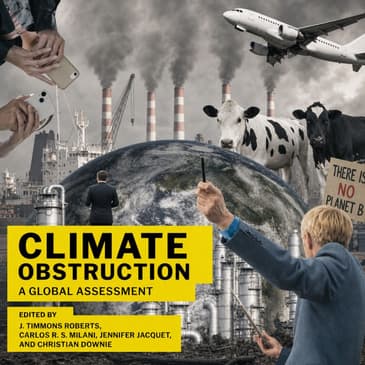
[00:01:54] Among the many articles he's been penning recently on this topic, and he also appeared in front of the Senate inquiry in Canberra recently, I believe, is a book he's co-edited with a number of colleagues called Climate Obstruction, published by the Oxford University Press this year, 2025. It provides a global assessment of the sort of obstructionism that has been put in place over the decades to slow down climate action by major corporate vested interests in fossil fuel industries and others.
[00:02:21] So thank you very much, Christian, for taking the time to join us here on Radio Northern Beaches. A pleasure, Michael. What is the nature of climate obstruction and where does misinformation fit into this? Well, climate obstruction, as you mentioned in the introduction, is very much we think of it as actions, intentional actions taken by organisations and other groups in society to slow block or reverse climate policies that are in line with the climate science.
[00:02:47] And climate misinformation, I guess, is one of the practices that those types of organisations use to try and slow down climate action. So you might have heard that offshore wind farms, for example, kill whales. Well, let me assure you, there's no scientific evidence in that case. Or that electric vehicles, you know, catch fire more often than petrol cars. Again, it's actually the reverse. Perhaps you've heard natural gas is clean. Well, it can actually be worse than coal. This is what misinformation or at least climate misinformation looks like. These are kind of common claims.
[00:03:17] They're influential, they're damaging, and they're often spread for a reason. And that reason is to slow the uptake of clean alternatives to fossil fuels. The unfortunate thing is that they're shaping public opinion. But that's this is one type of practice that we might think of when people are an organisation to try and block climate action. What is the underlying reason for the impact of misinformation on public perception? Is there an underlying sort of psychology that informs the way people react to it?
[00:03:46] Well, there is a lot of research and new research that's being done in this space. And what researchers have looked at, for example, is how different frames or discourses connect with individual shape public opinion. Other researchers have looked at what are the types of common frames and discourses that are used. And some I've given you some examples there. But we also see that there's a lot of doubt cast about the science. There's a promotion of false solutions. You know, we can rely on technology.
[00:04:11] Other discourses that you see are that, you know, don't worry, not climate change isn't as bad as climate scientists tell us. These are the types of tropes that are put out. We do also know that these do have an effect on public opinion. And this is really important because misinformation can influence attitudes and behaviours of both the public, but also our political leaders. And obviously, if we're going to tackle climate change effectively, it's going to require public support for clean energy and many other changes.
[00:04:37] And misinformation, like what we've been talking about, really erodes this support for climate science and climate policy. The other thing we know is that the more misinformation is repeated and spread, the more likely we are to think of it as true. It's a very complicated set of strategies undertaken by a range of actors, if you like, that do this obstructionism, if you like. And your work highlights the importance and work of the public relations firms. Then there's the work of industry associations and trade groups.
[00:05:04] And of course, there's also the direct lobbying and advertising and other activities of the corporate interests themselves, particularly in the fossil fuel industries. Perhaps we might start by having a look at the public relations firms and the role that they play in this obstructionism, particularly in promoting misinformation. What sort of techniques do public relations firms use?
[00:05:28] It's a great question because we don't always think about public relations firms as part of these political influence campaigns. We often think about the role of oil, gas or coal companies, but often these companies are relying on public relations and advertising firms to craft their misinformation campaigns, to craft their political strategies. So these campaigns often involve more than simply running a few television ads for a corporate client. Often PR firms run polling. They'll do focus groups.
[00:05:57] They'll do media and social media campaigns. Some will undertake astroturfing. This is a word that's used to refer refers to kind of creating fake community groups to give the impression of widespread support or widespread opposition for an issue or policy. The largest of these campaigns have been documented in the United States.
[00:06:16] And to gauge how much the oil and gas industry pours into PR firms to run political campaigns, for example, my colleagues and I analyze a decade's worth of tax records of industry groups active on climate change issues in the US. And what we found was that US oil and lobby groups actually spent in Australian terms 1.5 billion just on public relations advertising between 2008 and 2018. And what this money buys, for example, is a whole range of things.
[00:06:43] I'll give you a classic case that's often spoken about. And that is in the lead up to the US presidential elections in 2012, when Barack Obama was running for a second term, there was this group called Energy Citizens that appeared. And they ran an ad campaign titled I'm an Energy Voter. You could see it across newspapers, television, online. And it featured ordinary looking Americans saying, I vote for American domestic energy. Now, Energy Citizens appeared as a kind of grassroots campaign.
[00:07:11] But in reality, it was classic astroturfing. The oil and gas industry had contracted the large PR firm Edelman to run the campaign. The people in the TV adverts were actually paid actors. And so these are the types of campaigns that public relations firms run. And we also know that this takes place in Australia, too. Who are some of the key players here that engage in these campaigns that receive, as you say, well, in America, you know, in the billions, but presumably in the tens, if not hundreds of millions here in Australia.
[00:07:40] Who are the people in them? Well, unfortunately, in Australia, the type of analysis we did in the US, we can't replicate here because we have much poorer disclosure practices. So industry lobby groups in the United States, for instance, have to disclose their revenues and political spendings through their tax filings. Unfortunately, they don't have to do that here. So we know a lot less. We can't follow the same types of money trails. But we do know that PR companies are creating misinformation campaigns and astroturfing groups.
[00:08:10] So we know of groups like Australians for Natural Gas, which describes itself as a non-government organisation, but was set up by a gas company with the help of a PR firm called Freshwater Strategy, according to media reports. And we also know that many PR firms in Australia work directly for the fossil fuel industry. There's an NGO called Comms Declare, which has tracked who are all the PR firms in Australia working for the fossil fuel industry. And there are many.
[00:08:35] The good news is there's also PR professionals are pushing to cut ties with the industry. And there is a kind of movement within public relations professionals to say, you know, look, given how bad climate change is right now and it's only getting worse, perhaps we shouldn't be taking on these clients anymore. We've got a number of major examples in Australia, haven't we, looking back? For example, the Emissions Trading Scheme 2008-2010 and the Rudd proposed resource super tax.
[00:09:03] Both of these were proposed by government or policies and in place, which had huge PR campaigns mounted against them very successfully, didn't they? Yeah, I think sadly that the kind of history of climate policy failure in Australia larger reflects, you know, these types of political campaigns. And this goes back all the way to the 1990s. Some listeners might remember that actually during Paul Keating's government, there was an attempt to introduce a carbon tax and that failed too.
[00:09:30] And in part, many people put that down to opposition from gas and coal companies, utilities in particular. So it's been happening since the 1990s. There was Australia's failed attempt for many years to ratify the Kyoto Protocol, the emissions trading example you just gave. Even recent attempts to introduce fuel efficiency standards on cars here by the Labour government in their first term came up against a vociferous campaign from some automakers who didn't want the transition to electric vehicles to take place too quickly.
[00:10:00] So we do see this all the time. I think there's a quote in some of your work from the Secretary General of the UN to the extent that these public relations firms and on a global scale are enablers to planetary destruction. So clearly viewed from his global perspective, they have a big impact. Climate obstructionism that we're discussing with our guest here on Radio Northern Beaches, Innovation Talk Christian Downey, professor of School of Regulation and Global Governance at the Australian National University.
[00:10:25] Another one of the main channels for this is, of course, industry associations and trade associations. And we've seen many examples of that. And I think you described them or someone else does as doing the dirty work on behalf of these firms and corporates. And what is the role that these industry groups play in this? Well, industry groups or what's often known as trade associations play a particularly important role. So these are member based organisations. They work on behalf of their corporate members.
[00:10:53] Many of you will be familiar with groups like the Chamber of Commerce or the Business Council of Australia. There's others that like the Minerals Council of Australia that have played a very prominent role in climate policy debates over many years. And so we know that these groups are often the kind of public face of these campaigns. They allow their members, their corporate members who are worried about their public reputation and their brand to kind of stay in the shadows while these groups that they fund can then go and run political campaigns.
[00:11:21] So you often see, for example, that a gas company like Woodside, you know, which will give large membership dues to industry groups like Australian Energy Producers or others or say the Business Council of Australia. They might be the ones out there running political campaigns advocating for, as we saw recently, less ambitious greenhouse gas targets.
[00:11:42] And we also know from our work looking at the tax filings of these groups in the US that they spend huge sums of money on lobbying, on public relations, political contributions. They also give grants to lots of different organisations. So in the US, for example, over that 10 year period that I was mentioning, the 90 trade associations that we looked at that are engaged on climate change issues, you know, they spent a whopping 3.4 billion US dollars just on politics.
[00:12:09] Now, we don't have the numbers here, but you could assume that these groups would be spending tens of millions of dollars in Australia. The other thing we know is that firms often spend more than their lobby groups. So if lobby groups are spending tens of millions of dollars, you can be sure that some of the biggest carbon emitters in this country are spending plenty more trying to shape public policy.
[00:12:28] There's a range of methods, tactics, procedures which are deployed by these industry or trade associations and groups in advancing the interests and protecting company reputations and profits of their members. We are familiar with a lot of them here. For example, they channel money, don't they, in quite big amounts to, say, think tanks and universities to influence policy and views, do they?
[00:12:51] Yeah, I think tanks, you know, play an important role and often a very good role in democratic societies by taking ideas from universities and researchers and translating them into policy ideas and contributing to policy debates. The problem is we know from our research that many think tanks have also been spreading misinformation about climate change and a part of kind of global networks that have traditionally opposed climate action.
[00:13:17] So there's a network called the Atlas Network. This is hundreds of think tanks around the world. They've often got a kind of free market neoliberal agenda, but they've also been associated with questioning the science of climate change, casting doubt on scientists and on climate policies. In Australia, members of this network include, say, the Institute for Public Affairs. This is a well-known conservative think tank in Australia, but it still promotes voices that claim that climate change is a hoax or that climate change isn't real or not as bad as we might think.
[00:13:47] So we do know that think tanks in Australia have played a prominent role in opposing climate policies and simply spreading ideas that aren't true. Is money channeled into universities and research agendas? Yeah, so as I mentioned, industry groups is one example, not the only one, but they give money to a whole range of organisations, including universities. And the concern here is that we know that there's been a lot of excellent research showing that industry funding into universities does two things that are very concerning.
[00:14:16] One is it can distort research agendas. You know, it can shape the types of questions that researchers try to answer. And the second thing and even more concerning is it can actually distort research results. So there was a paper published a couple of years ago in Nature Climate Change, a very top journal, and it was showing that actually research centres at top US universities that have received money from the gas industry, it actually led to some biased results on their conclusions about gas versus renewable energy.
[00:14:45] So this is why funding, industry funding in particular, into research centres and others is something that I think we have to be wary of as well. To what extent is money handled through these avenues into a broad range of community and even sporting organisations? We have a case, don't we, only currently in the Parliament with the so-called Parliamentary Sports Club, with its corporate sponsorship and a big debate that's just being discussed about all that.
[00:15:10] But a lot of this sort of corporate money ends up going into sport and sporting organisations, doesn't it? Which isn't always, at the end of the day, necessarily very welcome. Yeah, and I think it's important to understand the kind of purpose for why firms and industry groups do this. And it's very much part of a kind of social licence to operate. So firms and industries, they want to be well-received in society, they want to have a positive brand image.
[00:15:33] And the reason they want that is because, you know, if something goes wrong in particular, perhaps there's an oil spill or there's some type of scandal, it's much easier for them to manage that type of crisis if they're well-received in society and if the public have a good view of them. But one way that firms and industries do that is by sponsoring sporting teams or community groups. And so there was a report, I think, from the Climate Council a couple of years ago just showing the level of fossil fuel sponsorship in our sports to the NRL, to the Rugby Union, to Netball Australia, the AFL.
[00:16:04] The Fremantle Dockers, for example, have received a lot of, are sponsored by the gas industry. And, you know, that's come under a lot of criticism. So understanding why these firms are doing it, which is, you know, really trying to make sure they're well-viewed in society. And then thinking about, you know, is this the right thing that sporting groups want? Should they be taking money from these types of organisations?
[00:16:25] Because we do know that, you know, those firms that are emitting, you know, large carbon emitters are really, you know, they're the ones that are causing, you know, some of the climate impacts that we're seeing around the world, including in this country. Seems a pretty widespread and well-established practice. But there does seem to be a small backlash to these things because haven't we recently seen people withdrawing these sorts of sponsorships? I'm thinking of tennis and cricket.
[00:16:50] Yeah, I think, you know, now that various NGOs and others are starting to shine a light on some of these practices, I think some sporting groups in particular start to see that actually there's a reputational risk from continuing to take this money. And, of course, you know, this isn't like the first time this has happened. You know, we think that Australia moved to ban or restrict advertising for products known to be dangerous like cigarettes. We've banned cigarette advertising and cigarette sponsorship because cigarettes cause cancer.
[00:17:17] And I think that's why we're seeing now a growing push to ban fossil fuel advertising or to ban fossil fuel sponsoring of sports because we know the damage done by these emissions. Of course, then, too, we come to a big general topic in the economy, particularly relevant in this context, I guess. This is corporate lobbying, both by the individual corporations. But I don't know if the lobbying and the putting of political donations and money happens through these industry and trade associations.
[00:17:46] But this is a big area for influencing climate obstructionism, isn't it? And looking after the corporate interests behind it. What do we know about the nature of this corporate lobbying effort in Australia and its impact from a climate point of view? Yeah, well, look, lobbying is not new. It's probably as old as democracies or older still. And most groups in society engage in some type of lobbying.
[00:18:13] What's particularly concerning in Australia is just the lack of transparency around it. We often don't know who the lobbyists are, how many they are, what they're advocating for. We don't even know how many, you know, who's sponsoring their passes to walk around the corridors of Parliament House. So we need to have a lot more transparency in this country about lobbying so that we can, you know, shine a light on some of these behaviours that are perhaps having undue influence on policy outcomes here.
[00:18:42] As you've mentioned, of course, there's the corporates themselves who, as you've said, I think, probably spend more than they spend through public relations agencies and industry groups themselves directly, don't they? How do corporations themselves promote their interests directly, not shielded by an industry association or behind the front of a public relations campaign that really funded an agency to do on their behalf?
[00:19:07] Yeah, well, firms take many of the similar political practices to trade associations. So they will engage in lobbying. They'll also have their own in-house lobbyists. They might consult external lobbying firms. They'll have legal advisors. You know, often firms engage in litigation for political reasons too. They'll do public relations as well. They might have a foundation and provide grants. So many of the practices are similar.
[00:19:32] We often distinguish between kind of inside strategies, and by that we refer to lobbyists walking the halls of parliament or the corridors of the Congress. And then there's often outside strategies. These are strategies like public relations, strategies doing polling focus groups, trying to shape public opinion through social media, television, radio campaigns and the like. Firms engage in both the inside and outside strategies, as do trade associations.
[00:19:57] Often there's just subtle differences in which group does what and how they emphasize it. But we sometimes refer to this as enabling. So you have the firms doing this work, and then they have a whole range of other groups that they pay off and that enable their political campaigns, industry groups, public relations firms, think tanks and others too. At the corporate level, how significant are the techniques that are often described as greenwashing?
[00:20:23] What is greenwashing at the corporate level, particularly here in Australia in the climate context? And is it widely practiced? Is it effective? So amongst corporations, you see greenwashing all the time. And a common example is when a corporation claims that their particular product is carbon neutral, when in fact we know it's not. And regulators in Australia, such as the ACCC or the financial regulator ASIC, have started to crack down on this.
[00:20:50] We're seeing more and more of these cases being brought to the regulators and being brought to court. And it's not just here overseas. I think it was two years ago, KLM, the Dutch airline. It was found that it was engaged in greenwashing because it was running this Fly Responsibly campaign. Same here in Australia with one of the big utilities. I think it was Origin, but you might have to check that, which was also found to be engaged in greenwashing, I believe, because of some claims it was making about carbon offsetting.
[00:21:20] So we're seeing more of these claims being tested in courts and by regulators. We're here on Radio Northern Beaches Innovation Talk. I'm Michael Lester in discussion with Christian Downey. He's a political scientist, a professor at the Australian National University. And we're discussing his work over a long period, including currently on the phenomenon of climate obstruction generally.
[00:21:41] And in particular, his co-editing of a major book that has been published by Oxford University Press 2025, which takes a global look at these situations. We've heard about the merchants of doubt. How important is the strategy of creating doubt about the science and about the policies that are proposed rather than completely denying them on the one hand? And on the other, promoting solutions that, in a sense, are not really solutions.
[00:22:09] For example, I'm thinking about nuclear power or carbon capture technologies. Yeah, so denying the science of climate change, I guess, was a key strategy, particularly in the 1990s, early 2000s, when groups simply said that climate change wasn't true and they were denying it. In recent years, particularly over the last decade, what we've seen is kind of a change in script rather than groups denying the science.
[00:22:34] They'll cast doubt on it or say, look, it's not as bad as many climate scientists would lead you to believe. Or they will say, listen, don't worry about climate change. We're going to have technology breakthroughs that will allow us to solve it. Or even sometimes you see the reverse, that, you know, it's a kind of doomsday framing that it's all too late anyway, so we may as well just get on with living the way we currently are. All of these discourses or frames are used to try and slow down action on climate change.
[00:23:01] And more often than not, when you look at who's behind them, it's typically some group in society that has a commercial interest in, you know, the status quo, that is in continuing to burn fossil fuels or continuing to, you know, have existing production and consumption processes. So we've seen a shift in the way this is done, but, yeah, casting doubt on the science is, I guess, a classic case. Yeah, well, Christian, as much of your work and discussion with you reveals, I think you do focus a lot on the money trail.
[00:23:30] Show me the money, the famous saying that if you want to understand who's doing what and why, you follow that money trail and usually take you to the source of the interest. As we wind up here, it all raises the question of what, if anything, might be done in reaction to these strategies. Very well funded, of course, by the big corporate interest to promote a broader public interest in all this. And you've already observed that in Australia, we don't seem to have much transparency even about what's going on, not even say compared to America.
[00:24:01] Well, I think at one level, we do need systemic changes. And by that, we need our governments to think about how they regulate in this space. So we could require groups like industry groups or think tanks that it's mandatory for them to disclose the sources of their revenue and their political spending. That's required of many actors in the United States, but not required here. So I think improving transparency around the funding and the spending of some interest groups in society would be a welcome change.
[00:24:28] The other thing we might think about is ensuring, I mentioned that regulators before, like ASIC and the ACCC, ensuring that they have the resources and the powers to often engage with those actors that are involved in greenwashing and bring them to account. Because I think in many jurisdictions, regulators simply don't have the right powers or the right funding to be able to go and clamp down on corporate fraud. So that's another important one. And then there's things we can do as individuals.
[00:24:57] You know, it won't be, it shouldn't fall on individuals. But I think, you know, because there's just so much misinformation spreading wildly, say, on social media, it is important when we have the time to try and verify the source of the information that we're reading. Check it, you know, the credibility of it. Is it from a peer-reviewed study or a reputable news outlet as opposed to just something on a blog? And do that particularly, obviously, we lead busy lives. It's not something we can always do, but particularly check, you know, verify a source before you spread it or share it on social media.
[00:25:26] And then I think one other thing is, you know, always be wary of information that's spread by organisations, such as industries that might have a commercial interest in an outcome. So if a gas company is saying that renewable energy is more expensive than gas, well, remember, of course, that that gas company is going to make more money if people stick to gas. So always be wary of claims made by, you know, private entities that have a commercial stake in it.
[00:25:49] Well, in terms of responses, Christian, between the state on the one hand that you've addressed and the individual on the other that you've addressed lies what we might call civil society or non-state actors. What do we mean when we talk about them? And what is their potential role? And are they living up to it? Or could they be doing more in different ways? There's a lot of great civil society groups or NGOs, as you put it, that are working in this space.
[00:26:13] I mentioned comms declare before it's an NGO that's tracking the work that PR firms are doing for fossil fuel industries. There's groups like they call Climate Action Against Disinformation, another wonderful network of NGOs that are that are trying to deal with the spread of disinformation in the climate space. Of course, often these NGOs have much fewer resources, say, than some of their opponents, like those in the fossil fuel industry. So NGOs are doing a great job and often they're doing it on an oily rag.
[00:26:42] But it's not just up to them to. We need to make sure that government is one of the most powerful actors in society is being pressured to put in place the right regulations to facilitate transparency and to ensure that we're not seeing these types of misinformation, other practices spreading too wildly. Well, I guess we can't leave this topic without mentioning, as I've almost admitted mentioning, the role of media, both the legacy media and social media in all of this.
[00:27:09] Well, look, I think the media, you know, they play a very important role. You know, one of the most important things they do is they hold powerful individuals and organisations to account. So I think, you know, a key thing to do is to look at not just for the media, that is not just what a personal group is saying in a press release, but also, you know, what are they doing? Where are they spending their time and money? Or as you put earlier, you know, following the money?
[00:27:32] Because I think if you have an oil company saying that we support net zero and have invested, you know, $10 million in renewable, but you look at their capital expenditure and actually find out that 90% of their revenue is going into new oil and gas, then, you know, we know that perhaps their claims about net zero are consistent. So media has a really important role in democratic societies, in holding powerful interests to account, in holding our political leaders to account and ensuring that public debates are robust and they're based on facts, not falsehoods.
[00:28:02] Well, that might be the ideal and the role. But I think we have plenty of evidence that our media and particularly legacy media doesn't necessarily operate in that way, which raises all sorts of interesting questions about why they don't. But maybe that's a deeper question for another day. As we wrap up here, one short last question. Given this Senate inquiry that you appeared before about misinformation and what have you, what do you think is the politics behind even convening that? And does that have any sort of prospect of trying to go anywhere or is it just another committee?
[00:28:32] Well, I think it's indicative of the growing concern across the parliament about this issue. I would note that, you know, membership of the committee and supportive membership, as I understand it, from multiple parties and crossbenchers. So that's encouraging. And the initial hearings which I participated in, senators seemed very eager to, you know, understand this problem better to gather information about it. So there's going to be more hearings in the coming months and the committee is due to report in February.
[00:28:59] Now, of course, I have no idea what the outcome will be and whether the government will act and regulate in this space. But at least at this point in time, it's encouraging that, you know, senators are looking into it. And I hope, like many others that contributed to the committee, that leads to some tangible outcomes next year. Well, thank you, Christian Downey, professor at the Australian National University.
[00:29:18] We've been talking about his work on the phenomenon of climate obstruction, particularly as fuelled and funded and in the interests of the commercial corporate vested interests in the fossil fuel lobbies and some of the techniques and impact that they're having. And maybe responses on behalf of the community and government to what's going on there. Thanks very much, Christian, for joining us. Thank you, Michael. Don't forget to follow, like and share. Stay safe and I'll catch you next time.