
[00:00:00] Hi, I'm Christine McCormack from Radio Northern Beaches and you've just tuned in to the Listen and Chat with Christine McCormack Podcast. This is the space where we pull no punches, sometimes a little controversial, sometimes downright outrageous, and sometimes just packed full of information that is interesting to know. Today my friend and fellow presenter Michael Lester is speaking with Jen Vanstone about a development on the Northern Beaches.
[00:00:28] The Programmes Community Voices and I'm Michael Lester. Local residents on the Northern Beaches have generally reacted pretty strongly against some of the broad policy decisions and new legislation by the state government in New South Wales to declare areas of state significant development whereby local development plans and approvals by councils are overridden in terms of broader national state interests.
[00:00:52] And in particular, there's a development that's now proposed by Opal Health Care at Bayview on the Northern Beaches, by the name I believe of Carefull, which is going to be a very large 24-7 residential aged care facility. I'm very pleased to welcome to our program to discuss the concerns about this locally, Jen Van Stone, who's a local campaigner in the Bayview area and directly affected along with fellow residents by this particular proposal
[00:01:19] of the Opal Health Care at Bayview, but also with John David, a campaigner more broadly on the Northern Beaches against these types of developments and particularly out of Mona Vale. I think he campaigns on behalf of an organization called SOS Mona Vale and involved in three or four campaigns. So thank you very much guys for joining us on Radio Northern Beaches. Hello Michael. Hello Michael. Hi Jen. You are a local clearly much affected and concerned by the processes here.
[00:01:48] I think some of your quotes about the nature of your concern are captured by statements like the New South Wales government and New South Wales planning are determined to destroy the place we call home through neglect and negligence. And also you make the broader statements too that you believe that these plans are sacrificing Northern Beaches to their own advantage, I guess you mean political advantage. Does this capture the way you feel about what's going on about this development and more broadly?
[00:02:16] Yeah, I mean it certainly does. Those comments in retrospect do feel quite, but that is how I feel and how local residents in my neighborhood feel. I feel like also just the general process of these state significant developments and how they happen and the amount of time that we're allowed to give feedback as residents, you know, 14 days and it takes you four or five days to go through the actual proposal.
[00:02:44] The system is really not designed for inviting feedback from residents. You also see as you're going through the proposal, you know, I know it's written by a developer, but they are very down with the terms that New South Wales government, state government are going to be looking for in those proposals and they make, you know, valid arguments as to why they've gone against certain state government planning protocols and recommendations.
[00:03:13] So yeah, it really is a hard, hard thing to navigate as a local resident. And I think ultimately in a little community like Bayview, and I'm not talking Bayview with the swanky cars and lovely views. I'm on, you know, the hidden part of Bayview up amongst the trees. It's very residential. It's quiet. It's low rise. There's little traffic for state significant developments like this to come along, you know,
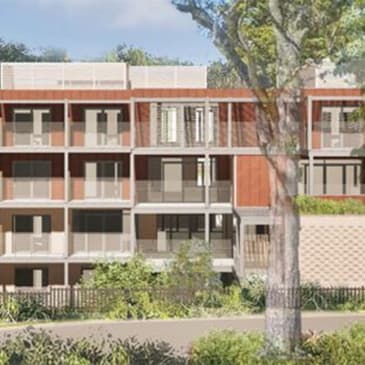
[00:03:42] three plus stories high, 24 hour operation. It really is going to be changing our neighborhood ways that we are not okay with. What is the scale of this operation? As you understand it, you say it's three stories and what's the nature of its operation? So it's an aged care facility, which don't get me wrong. I and all the residents are fully in support of aged care. You know, we need facilities just like this.
[00:04:11] We have an aging population, particularly here in the northern beaches. But the scale, the size and the position of this proposal, this development proposal is really at odds with the local character of our neighborhood. And I just think that there should be more consideration given for where these aged care facilities are going to be popping up. This one in particular is 177 beds, each with, I assume, a bathroom.
[00:04:40] And, you know, it's a high needs facility. It's going to be three stories high, but there's going to be a load of operational equipment on the roof. And, you know, it's a hospital. It's it's the ceilings are going to be higher. Those floors are higher than your typical stories. And there's also going to be underground parking. There'll be drilling into the limestone, which I hear is very disruptive to the environment and, you know, infrastructure as it is.
[00:05:10] And it's going to be operating 24 hours a day. So there's going to be lots more staff, visitors moving in and out of the facility at all hours. There'll be lights on. There'll be noise generated. There'll be service trucks coming and going. Well, as you say, this sounds like it could have potentially significant external impacts on the environment with and lack of infrastructure there, presumably to do with noise and roads and lighting and 24 seven operations.
[00:05:38] But you referred to essentially a concern that's destroying the character of the place that you live in, which obviously is a very beautiful place. But to what extent do you think this is just a straightforward case of not in my backyard, given that, as you say, we've got aging demographics, particularly on the beaches. We're short of accommodation. Old people are crowding out public hospitals, including on the North Shore and taking up valuable spaces in hospitals because there's no aged care facilities.
[00:06:07] So is this pretty much a straight out? Well, we need these things, but we don't want it in our backyard. That's a very good and fair question and one that we have as residents been toying with back and forth. The development is proposed. It's already been developed. It's been left to full derelict over the last six years, but it does actually form part of the Bayview Gardens, a VO retirement community.
[00:06:35] Now, they did have an aged care facility sort of on the back of the property and they have a handful of buildings that have been, you know, left. They decided to close that center down for whatever reason. So there is space there for development of some kind. And we would definitely welcome some form of development. I think it's a waste of good space, but it's very much the design of the place. And, you know, it's only two stories high.
[00:07:05] It's very quiet. It's hidden back from the road and it's a lot smaller in size. We welcome development of some kind. We just don't feel like our local area can support such a big facility that they're currently proposing. The road infrastructure is not there. It's actually a very dangerous section of road where they're proposing the entries. There'll be two, a main entry and a service entry leading down to the car park.
[00:07:32] That section of road has a blind caller and a blind Crescent, another corner street that feeds onto two cul-de-sacs with about 40 houses on it. So it really is a very precarious position to be placing such a heavy flow traffic entry. And then we all cannot ignore the fact that at the end of our road is Cabbage Tree Road, which is a notoriously dangerous section of road as it is.
[00:08:02] Northern Beaches Council have taken the last 12 months to try to add in measures to slow traffic, to calm traffic. Yeah, it's a very precarious position that they are suggesting the entry go. Why they cannot enter from the current residential, the Bayview Gardens development that already exists, we're not sure. And that is something that we have written back to developers to ask the question of.
[00:08:30] Yes, it's definitely not a question of not in my backyard. I think we all agree that there is a desperate need for aged care housing. You know, we all have parents that are going to be moving in there at some point. But for us, it's really the scale and size of this very particular development. Sorry, Michael, if I can pop in on that. It's probably useful for me to overlay what's happened to Mona Vale. The Nimi thing pops up a lot when you live on the northern beaches.
[00:08:59] Yet, I think if people come and visit the northern beaches, they won't find too many silver tales, shall I say, up here. Beaches people are fairly down to earth. I will say this, though. Mona Vale is to a planner in the city. Mona Vale has only 11... Mona Vale and Bayview have only around 11,000 residents in it. However, it's a business hub for the beaches.
[00:09:25] So, it actually supports on a daily basis some 64,000 people because of the business centre and tradies and people come for the medical and so on and so forth. So, it is pulling its weight on the beaches above what the infrastructure allows. We have just two roads in and out of Mona Vale. We don't have a 24-hour train station. We don't have dedicated bus lanes.
[00:09:49] We have Mona Vale Road, which by the way, still not finished because the state government withdrew funds from it, though they've promised that they will fund it. It's still a bit of a goat track in parts of it. And then Pitwater Road, and that's the only way in and out. So, when Jen talks about the infrastructure, the infrastructure is strained now.
[00:10:09] The Worrywood sewage facility is supposed to be able to support the area until 2031, but routinely now exceeds its capacity. When that occurs, raw or partly treated sewage is spewed into the sea on the coast here. That is happening now without the blanket redevelopment that the state government has put across Mona Vale.
[00:10:34] So, the state government, in order to get these state significant things in, and look, let me also say this. Not anti-development. I live in a townhouse, and if it wasn't for a developer, I wouldn't probably be living in Mona Vale. So, development we get. Appropriate development is what we want. But the state significant and the LMR legislation blanket rezoned Mona Vale, and therefore Bayview.
[00:10:57] 50% of the streets were rezoned to allow higher scale development, like what's opposite Jen, but also four to six to eight storey buildings. So, there are parts of Mona Vale now where the streets, if the developers choose, the streets can contain six storey luxury apartments.
[00:11:19] And likewise, many of the aged care facilities around the place are ramping up to take advantage of the luxury end of the market. Because anywhere on the coast in Australia, there is a demand for that kind of property. So, it's the change in the character of Mona Vale which is being imposed by the state government, top down. Sidelining councils, by the way. So, councils no longer assess these state significant developments. They become submitters.
[00:11:48] So, they put in their submission, and the state government, and by the way, I'll tell you, it's a panel of just three bureaucrats, make decisions about what will happen in Mona Vale. So, they can turn Mona Vale, and therefore Bayview, into a mini Gold Coast if they want to. The character of the place, as Jen said, she moved to the area to enjoy the kind of life that's here.
[00:12:12] And now, by stroke of a planning pen, the state government have decided that they will entirely change the character of the suburb. And we're not up for it. So, Jen's angry. She's entitled to be angry. There are, at this stage, only two state significant developments under consideration for the area.
[00:12:31] There's one in Daly Street West, which will take a cul-de-sac and put three six-storey buildings in it, housing 82 apartments, luxury apartments by the way. 164 cars into a dead-end street. Jen's in exactly the same boat. It's a quiet street, and they're going to push traffic into it.
[00:12:53] Now, especially in Jen's case, because it's a nursing home facility that they're putting in there, that's 24-hour traffic into a quiet street. That's light 24 hours a day, because it'll be a 24-hour facility. And that's all the mechanical noise that comes with the coming and going into a quiet street. The problem is our infrastructure up here cannot support it. And one last thing before I give you back.
[00:13:19] The state government have promised zero dollars to improve infrastructure in the area. No dollars for roads, no dollars for the sewage system, and so on. So that's the background you on where Jen's coming from. She is not alone. That is happening in many places in the area. Thanks for that rundown, John. John, you've invoked the concept that the area is pulling its weight. Of course, this is a statewide issue. It's not just a northern beaches issue. The state and the country has a housing problem.
[00:13:47] The New South Wales government at the state level has committed to nearly 400,000 new houses by 2029. They've amended planning and environment legislation to try to get effect to this target. So they put in place legislation and processes. But as you say, you believe the area is pulling its weight. It certainly does sound like the infrastructure considerations are not very much taken into account. I guess the question is, who's deciding on this?
[00:14:14] Is this a developer driven process or is there a strategic planning process that allocates these target developments fairly and in efficient and effective ways across the state? Without a doubt, the state government was at the last election given a mandate to deal with the housing crisis. We understand that. And nationally, it's exactly the same thing. And therein lies the rub.
[00:14:39] So blanket rezoning, in my view, which is just lazy to take a suburb and probably do this by planners somewhere, you know, in a board in a boardroom in Macquarie Strip, perhaps. Look at suburbs like Montevallo and say, oh, look, it's only 11000 people. It's got lots of green space. It can handle it. However, they don't come and look at the place.
[00:15:00] So the issue is that in the name of affordability, these projects in a place like Mona Vale and Bayview, I have to, Bayview, if you live in a certain part of Mona Vale, your postcode can be Bayview. So it's a little bit confusing at times. In the name of affordability, they're knocking down affordable property and building high level luxury property. So the motive of the state government most definitely is to provide affordable housing. I get that.
[00:15:30] The reality is that a property that's probably worth a little less than 2 million or around 2 million is knocked off and then six levels of apartments are put up and they're worth 2 million each. So affordability actually goes in the wrong direction when they do it.
[00:15:47] The way they get access to that is by allowing developers can, if they provide 10% of the space, are allowed to get a couple of extra levels in. And those extra levels give them Northern Beaches views, let's say. Not always the sea, but you know, Northern Beaches green views and so on. The developers know that there's a demand for luxury property up here, not affordable property. You could put a fiber, it's just the reality of the market.
[00:16:17] You could build a fiber on a piece of dirt up here and that fiber would be worth a fortune. So it's an anomaly to suggest that what we're saying is the development that's in this area here is using the legislation. I'll say the developers are using the legislation. And you asked if it was developer driven. I have no doubt it's developer driven. What Jin's experienced is plans are going in that probably took two years to plan. The legislation only came in about a year ago.
[00:16:47] And we're previously under a council. We would get 30 days to consider the proposition as community. Consider the proposition and then put in our submission. And that would be listened to by a council that had listened to people and had a place plan where they had consulted with locals over time. So the community was very much listened to. Now, that's put down to just 14 days. So they squeeze our ability to look at general experience.
[00:17:17] This the EIS that's put in is generally hundreds and sometimes thousands of pages long. We get 14 days to look at it and provide a submission and then they close off submissions. You've said along the way that if the developer chooses, you're seeming to imply that within this legislative planning and environmental framework that there's a very strong degree of developer driven choice. To what extent are developers free to actually choose areas and developments under this?
[00:17:45] Is that what you're implying that there's no constraints and regulations that they have to meet? Here's a statistic for you. All right. Many developments more on the level of DA's because they don't quite qualify for STA. Many developments in further west from us here have been proposed and have been accepted and would deal with the affordable proposition. Only about 5% of those have been started.
[00:18:10] When the blanket rezoning occurred in this part of the world, developers deserted that part of Sydney and came here because they're after the big buck. It is harder for developers to make a profit when they've got to provide affordable property further west and they've got to provide it at a price point where people will be able to buy in. Over here, they can chase the luxury dollar. So they're very keen. So we get it. Appropriate development is what we want. And let me underline it. It's not an NB thing at all.
[00:18:40] Appropriate development is what we want. But when you're living in single level houses or two level townhouses or lower level property and suddenly you're through legislation, you can have a six story building next to you. I should add, probably this is not about capital gain. Most people will make capital gain from it as well. But that's not the point. It's the character of the suburb that we love. And from top down, they've decided they can destroy the character of the place.
[00:19:09] Talking here with John David from SOS Monovale on Community Voices Radio Northern Beaches about states' significant developments, their impacts, and particularly too, we've been discussing the specific development of the Opal Healthcare proposal at Bayview with a local resident, Jen Vanstone. The question of these targets and who meets them, you've said, and of course we understand the state development legislation takes the DA controls away from local councils and vests it at the state level.
[00:19:38] What role, if any, in all this do the councils play in saying, well, look, a target's been set for so many houses for the northern beaches or developments. These are the best places to put them or is no such process involving local councils and consultation in place that the actual places that are going to be developed. These are open slather, are they?
[00:19:59] Prior to this legislation in our OKC area up here in Pittwater and on the northern beaches, the northern beaches council at the time were actually living up to goal or a standard that the government said we need to get people into houses.
[00:20:42] We need roofs. Not just in the beaches, but right across Sydney. This is a problem in Greater Sydney where the state government has decided they're going to squeeze people in at all costs and ignore the community. And that's where the anger is coming from. And I'll let Jen talk to that. I'm sure she's got some passion around that one. Jen, back to you in terms of the processes. You're in the process, are you, of making some form of submissions or have that closed?
[00:21:10] I think we understand from what you've said that it's a short window. Where's that whole process at? Yeah. So submissions, the submission deadline was due last week. So a week ago, we managed to get 50 submissions in total. Majority were object. I think there was one support from a chap down in Chatswood. So thank you for that one. He actually asked if it could have more beds in it. So thank you for that feedback. It's great.
[00:21:39] Another one was just feedback on the proposal. But very much when you're going through it, it is very much framed as an objection. So they must have just pushed the wrong button. We did get a submission from the council. They were raising concerns around the size of it and the infrastructure and ecological impacts. And Jackie Scrooby also did a submission as well. And she came to visit the site and was very understanding of our concerns.
[00:22:05] As a final point, I would just like to touch on the developer angle and kind of how we're seeing it play out. I'm talking from aged care. I think John's got more experience around affordable housing. But aged care is a very specific industry, I suppose. And it is an industry. It is very much a, you know, Opal Healthcare are in it for profit.
[00:22:30] And we're seeing, you know, they've hit the news within the last week for wanting to charge residents an extra $10,000 on top of their current month annual bill for the basic necessities like a TV in their bedroom, a hot cooked breakfast. So, yeah, this is an organization that is very much prioritizing their profits.
[00:22:54] They've got a handful of developments proposed and in the new South Wales planning portal proposed for, I think, five, I think was my latest count from here across to St. Ives, Hornsby. So you can go and take a look at those. They're all large, large developments again. And as we say, we're not against development in general. And aged care is a very important thing that we need to be delivering on. But it's just the scale of these developments.
[00:23:21] And, yeah, well, Jen, as you say, aged care has its own very specific issues, some of which you've alluded to. And this is a private sector for profit proposal and operation. I was intrigued to hear and I wasn't aware that the citing question by what I think I heard you say had previously been used or developed and then left to fall derelict over years as an aged care facility. Was it? And was this a facility that was being run privately?
[00:23:47] Because a lot of private facilities in recent times, aged care, have actually shut their doors and left people stranded. Yes. I don't know the full history, but I know that it was owned by a VO. I hope I'm saying that right. Part of the residential community. And they still own the land. They still own the buildings. What this proposal from OPAL signifies is that, you know, it's a development proposal subject to it being approved,
[00:24:14] in which they will then move ahead, purchase the land and start their program of works. But, yes, it must have closed down four, six years ago. I can pop in on that because my own mother actually ended her days in Bayview Gardens. So Bayview Gardens is a retirement facility. That sounds like it's a high security thing. So the nursing home at the time did fall into this repair.
[00:24:43] And when my mother needed to move into it, it was closed then, primarily because it had run down. But it was part of the retirement place. So OPAL have taken it over and are developing it. Right. So it wasn't OPAL originally involved. As we wrap up here on Community Voices Radio Northern Beaches with our guest, Jen Vanstone, a local resident in Bayview who is leading local concerns and submissions about the proposed state significant development of the OPAL Healthcare 177 bed residential aged care facility.
[00:25:11] And also with John David, who's been campaigning on behalf of SOS Mona Vale on state priority developments on two or three occasions already out of Mona Vale, as we've heard. Just to wrap up here, it's perhaps not to contemplate, but there is an appeal process after all these submissions too that can go to the Land and Environment Court. And I don't know if people are already taking these cases to the Land Environment Court. Perhaps it's not a nice track to have to contemplate, not least the costs and whatever.
[00:25:39] Is this a path that you might have to be treading, John? Well, I'll say to you, the Land and Environment Court generally deals with appeals around DAs, development applications, which are through the council. If you put in a state significant application, that path is different because it's taken out of the hands of councils and dealt with by the state. So that path is a little different. And in terms of appeals against it, I don't know how that goes.
[00:26:06] But Land and Environment Court generally deals with appeals by developers to DAs approved or denied through the council. So it was my misunderstanding that it would also be an appeal venue. You say it's not relevant to the state significant developments and maybe there's some other appeal process. Well, look, thank you very much, Jen Vanstone and John David for joining us on Community Radio Northern Beaches to talk about these obviously concerning proposed developments,
[00:26:33] over developments as regarded by many residents there in the Northern Beaches under the rubric of state significant developments. And particularly we've been discussing the Opal Healthcare proposal at Bayview for Careful, I think it's called. Thank you very much for joining us on Radio Northern Beaches, guys. Thanks for the opportunity, man. Bye, Jane. Don't forget to follow, like and share. Stay safe and I'll catch you next time.